
When Retail Giants Enter Housing:
What It Means for Backyard Builds and Compliance
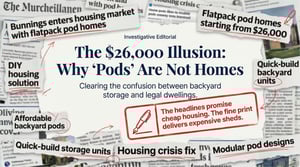
Bunnings’ recent move into the housing space is more than a product announcement. It’s a reflection of the pressure Australia’s housing market is under.
When a major national retailer begins offering backyard pods and modular studios, it signals strong demand for faster, more accessible ways to create additional living space. That demand is understandable. Families are adapting to multi-generational living. Remote work is now embedded in many industries. Rental vacancy rates remain tight. Affordability remains a challenge.
Innovation in response to these pressures is positive. However, as the market responds, it is equally important to maintain clarity around compliance, certification and long-term suitability.
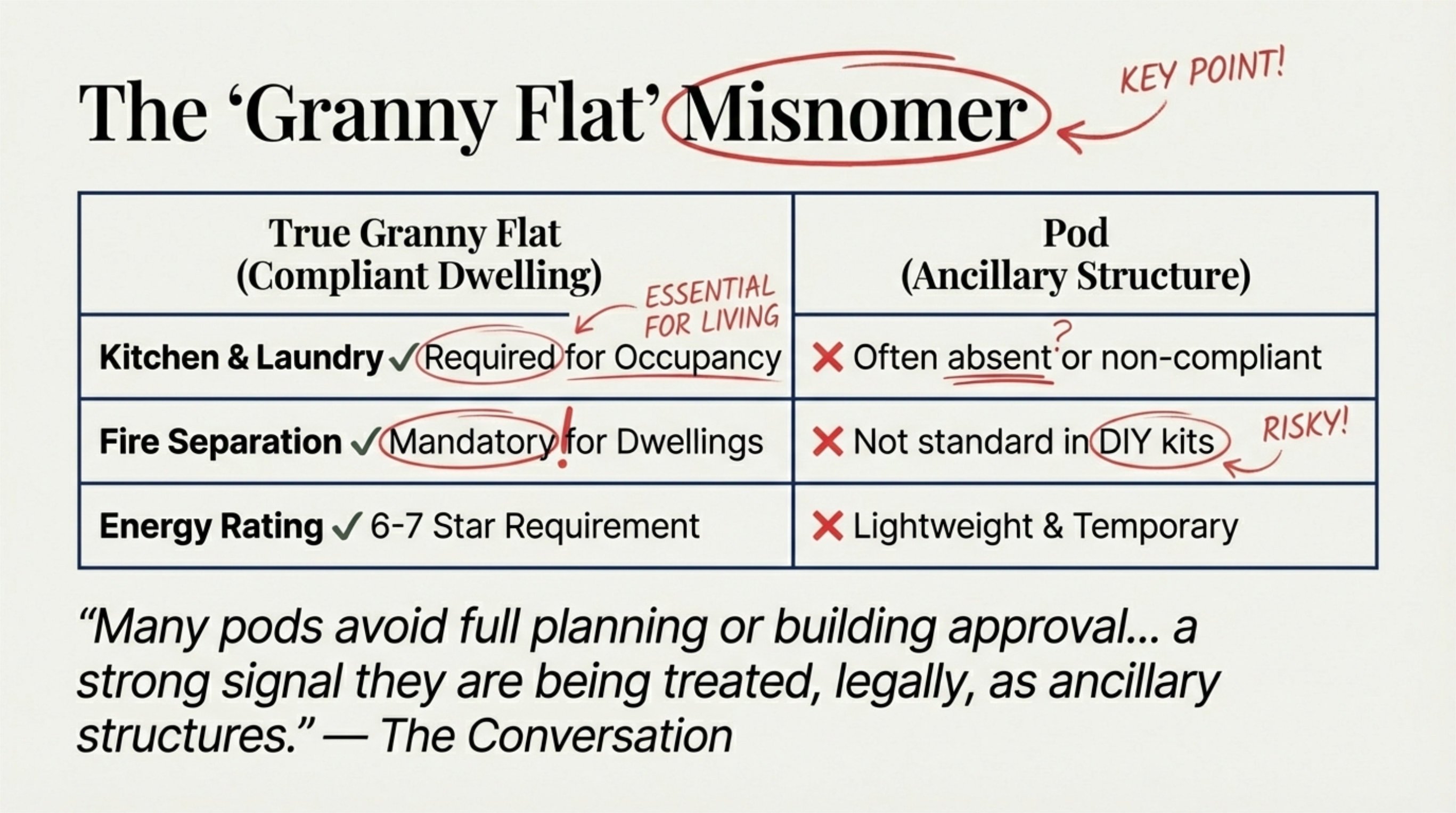
Because not every structure described as a “granny flat” functions as a legally compliant dwelling.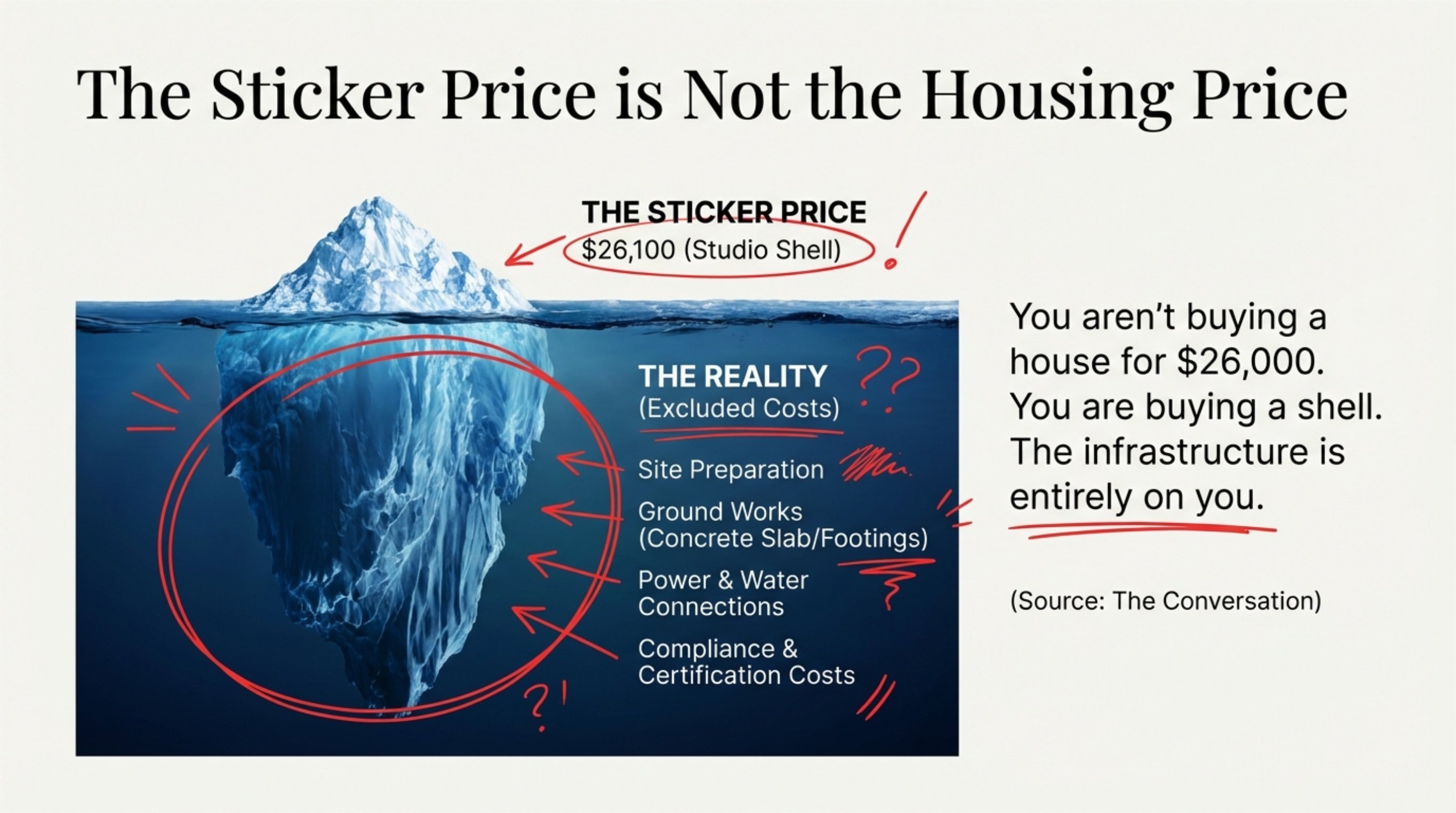
Backyard Pods and Modular Studios Have a Role
There is no question that modular studios, pods and flatpack structures can serve a valuable purpose.
They may be well suited for:
- Home offices
- Creative studios
- Temporary accommodation
- Transitional living arrangements
- Flexible lifestyle space
In clearly defined circumstances, these solutions offer speed and convenience.
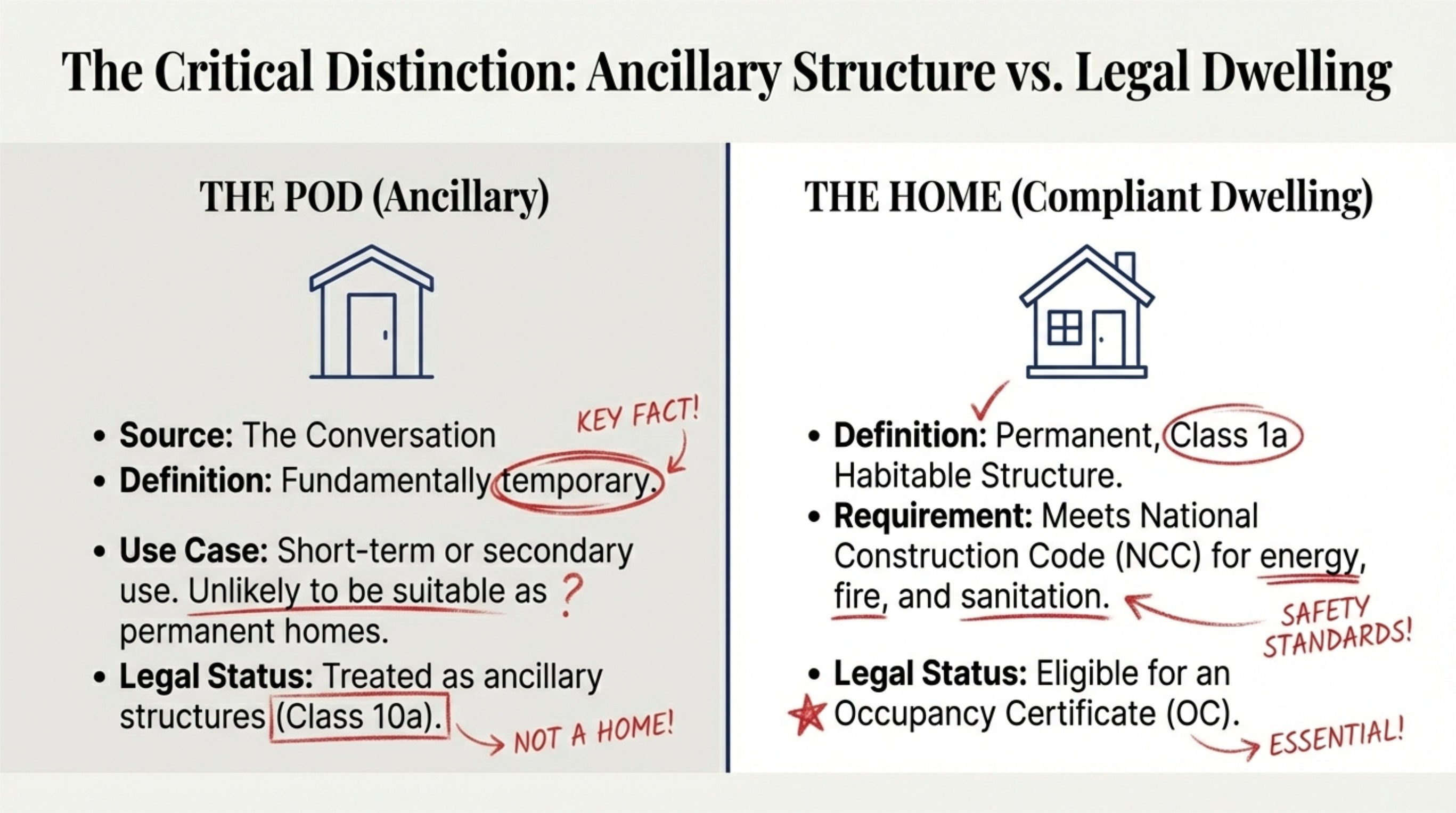
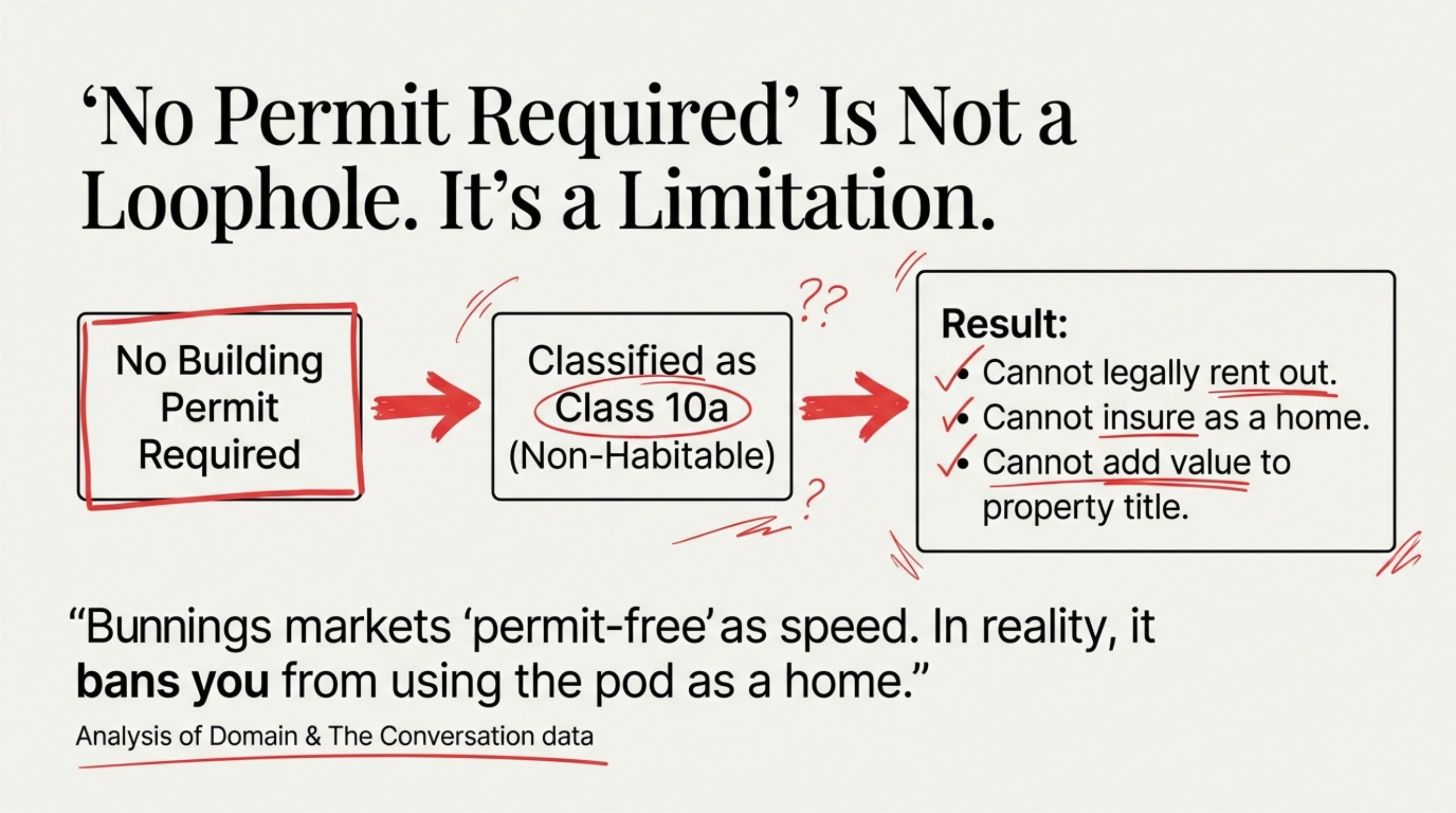
The issue arises when temporary or ancillary structures, such as these newly promoted products, are interpreted as permanent dwellings. Once a structure is intended for habitation as a secondary dwelling, the regulatory framework shifts significantly.
Understanding that distinction is critical for the industry. .
 The Difference Between a Structure and a Dwelling
In planning and building terms, a compliant secondary dwelling must meet established regulatory standards, including:
- Local planning controls
- An appointed building surveyor and licensed builder
- Building Code of Australia (BCA) requirements
- Structural engineering compliance
- Fire separation provisions
- Energy efficiency standards
- Plumbing and drainage approvals
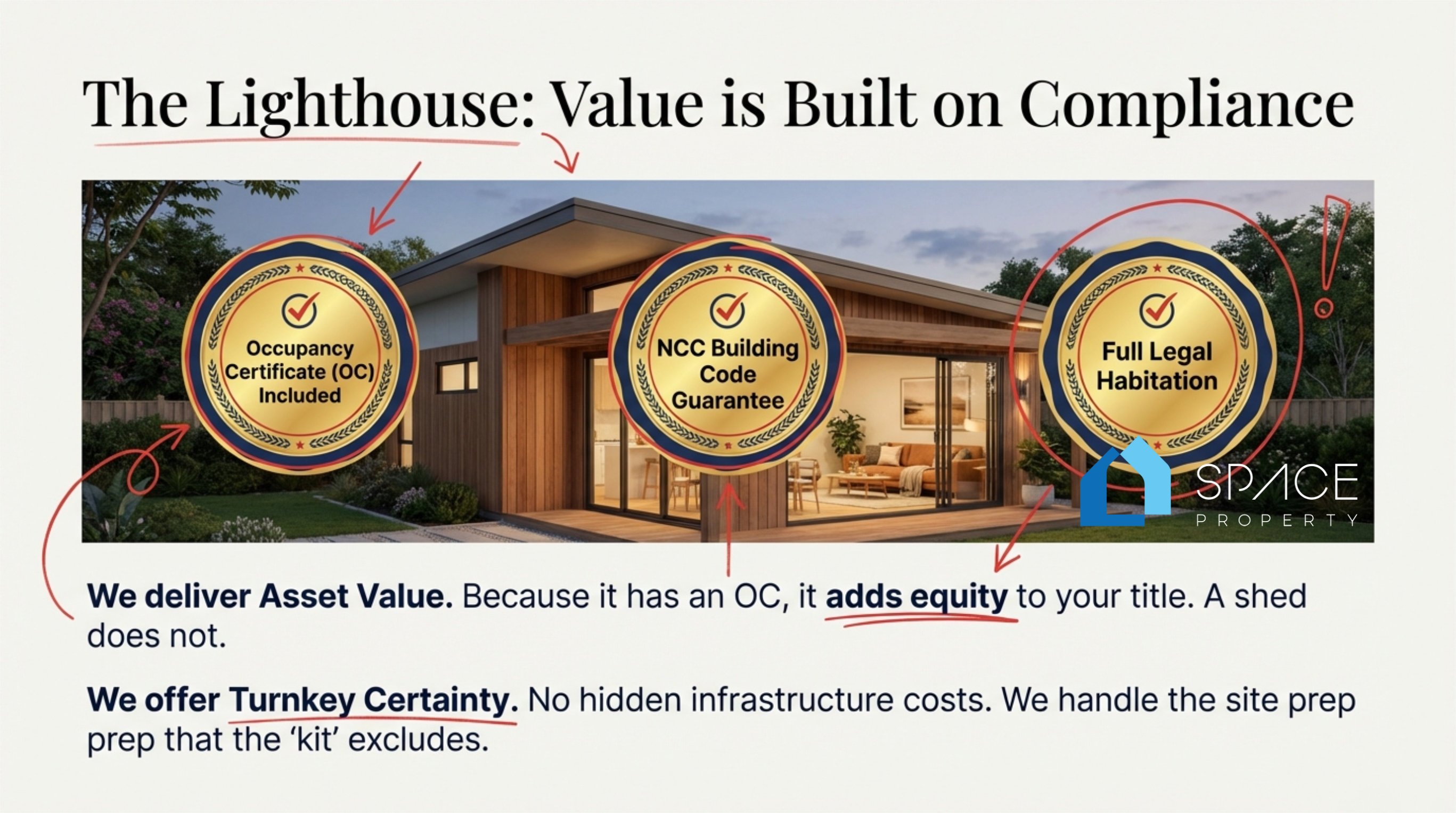
- Occupancy certification
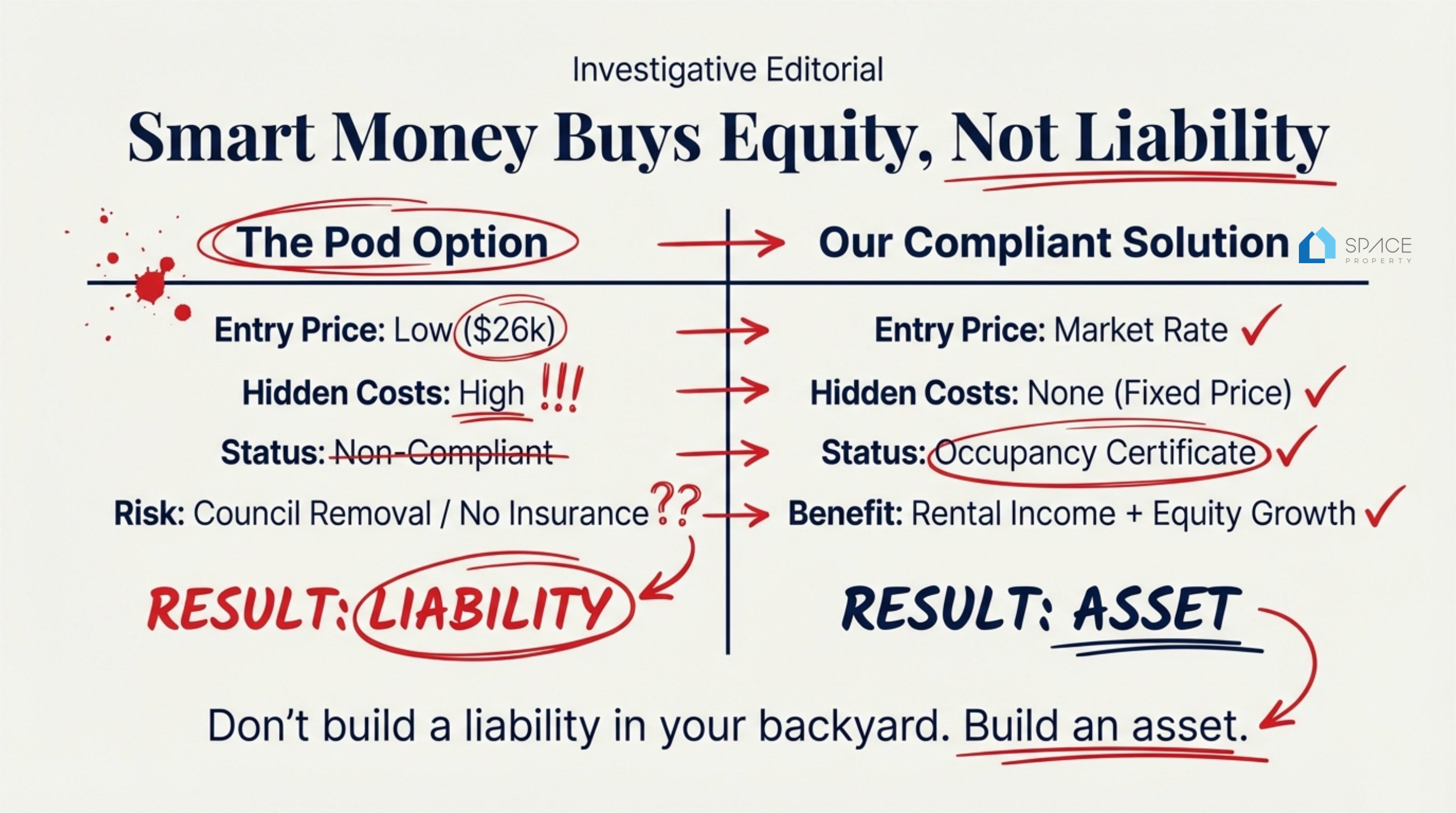
A structure designed primarily to avoid planning or building approval may serve a purpose, but it does not carry the same legal standing as a compliant dwelling.
This distinction affects:
- Insurance eligibility
- Financing options
- Property resale value
- Rental compliance
- Council enforcement risk
- Long-term asset performance
At Space Property Homes, compliance is not an optional extra. It has remained foundational to how we deliver projects.
Professional Commentary on Compliance
“From a regulatory perspective, the classification of a structure determines the compliance pathway. A building intended for habitation must satisfy the National Construction Code and obtain the appropriate certification. Structures marketed for flexible or ancillary use do not automatically meet those standards. Property owners should ensure they understand the intended classification before proceeding.”
This independent perspective reinforces why clarity around use, classification and certification is essential before committing to any backyard build.
 Speed Is Appealing, But Certainty Is Essential
The appeal of rapid installation is understandable. Many products entering the market promote short build times and simplified processes.
However, delivering compliant housing involves more than assembly. It requires:
- Site assessment and soil classification
- Engineering design
- Service connections (water, sewer, electricity)
- Stormwater management
- Council planning approvals
- Building permits
- Final occupancy certification
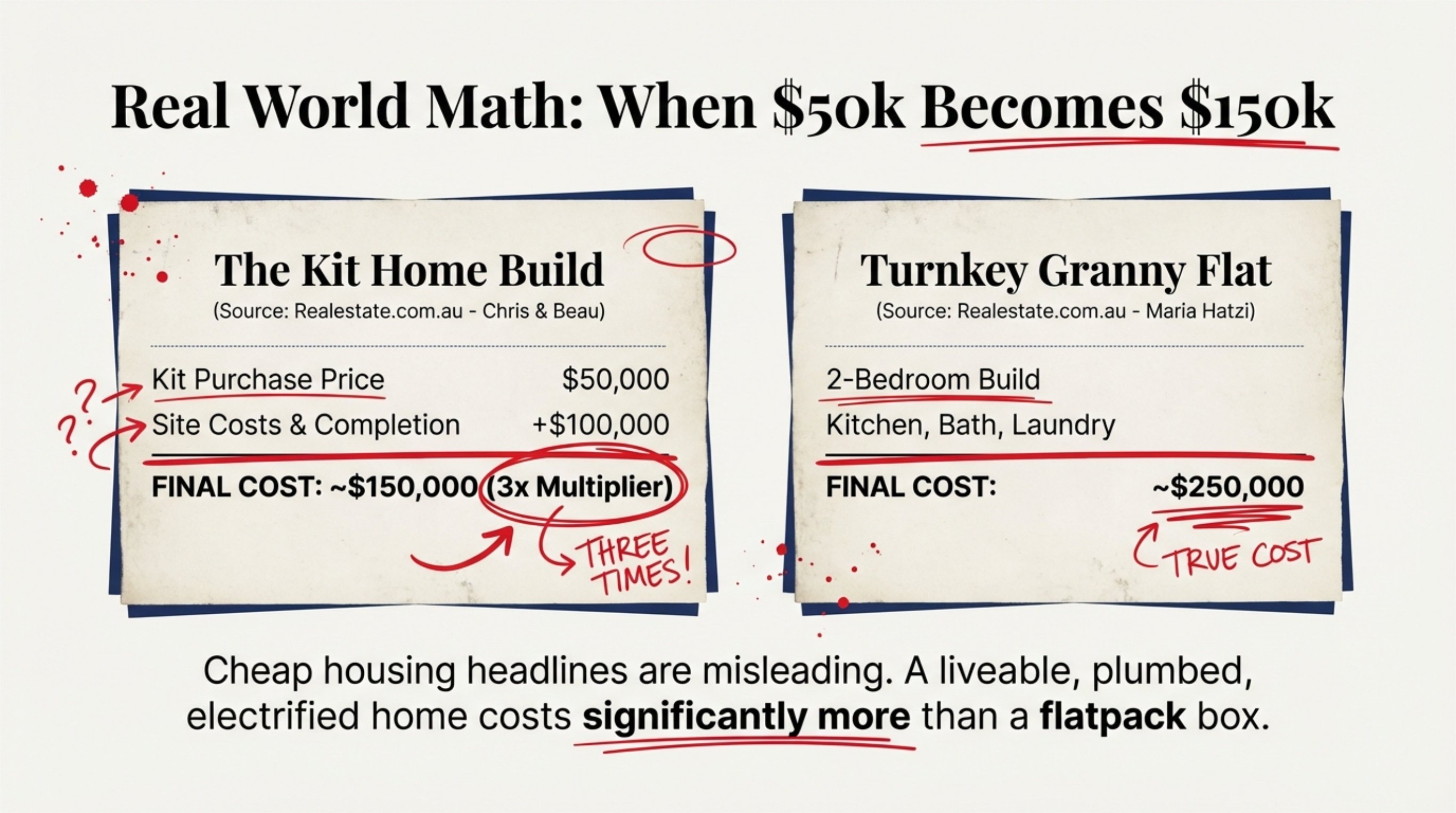
When these elements are not fully considered, projects can encounter unexpected costs, delays or regulatory complications.
The conversation should not be framed as traditional construction versus modular speed. The more productive question is:
How can compliant housing be delivered more efficiently without compromising standards?
 The Broader Housing Challenge
Australia’s housing shortage is structural and national in scale. Addressing it requires more than individual products or one-off solutions.
The core issue is not simply how quickly a structure can be installed. It is whether quality housing can be delivered at scale in a way that is:
- Compliant
- Financeable
- Insurable
- Durable
- Sustainable for the construction workforce
Pods and modular studios contribute to housing diversity, but they do not replace the need for structured delivery systems and regulatory clarity.
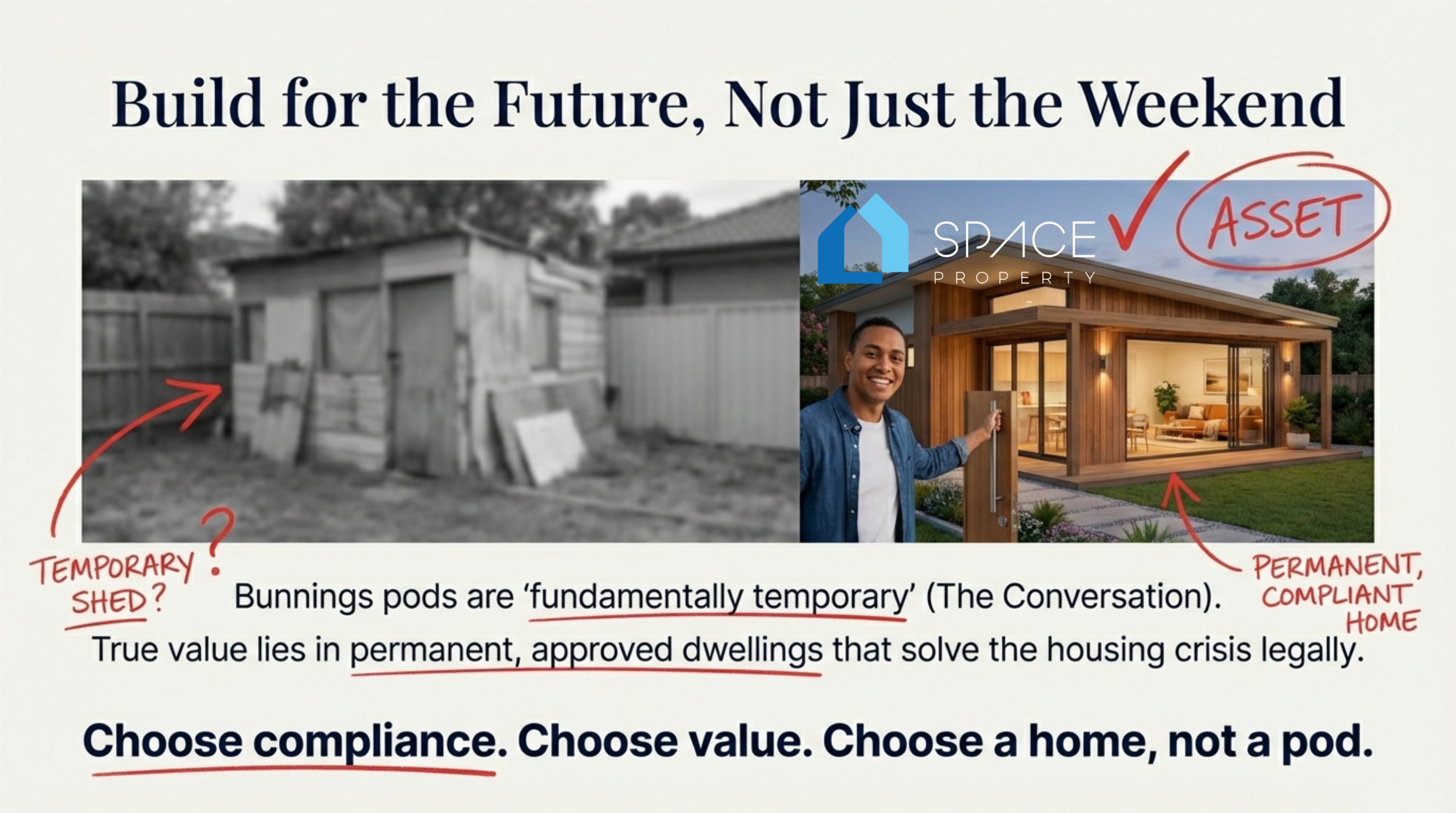 Space Property Homes approaches secondary dwellings and backyard builds with full lifecycle consideration.
That includes:
- Clear approval pathways
- Transparent documentation
- Regulatory alignment
- Long-term asset protection
Because our clients are not simply adding space - they are enhancing property value.
Responsible Innovation Matters
We welcome innovation within the housing sector. Manufacturing-led approaches, modular efficiencies and technology integration all offer meaningful opportunities to improve productivity.
However, innovation must operate within established compliance frameworks.
Responsible delivery requires:
- Clear communication
- Accurate cost expectations
- Proper approvals
- Appropriate certification
- Quality control
- Long-term performance
Housing solutions must withstand regulatory scrutiny and deliver safe, habitable outcomes for occupants.
 Supporting Sustainable Housing Delivery
Addressing Australia’s housing needs also requires a sustainable construction industry.
Builders and trades are operating under increased cost pressures, insurance complexity and workforce shortages. Expanding housing supply cannot come at the expense of industry stability.
A viable housing strategy must balance:
- Productivity improvement
- Regulatory clarity
- Workforce sustainability
- Financial feasibility
Without these foundations, supply efforts risk creating additional strain rather than long-term solutions.
 Moving the Conversation Forward
The entry of large retailers into housing demonstrates urgency. It highlights consumer demand and signals appetite for alternative delivery models. That momentum is valuable.
The next step is ensuring that innovation is paired with clarity, particularly around compliance, certification and long-term suitability.
For Space Property Homes, this means continuing to focus on:
- Compliant secondary dwellings
- Structured approval pathways
- Integrated design and construction
- Transparent communication
- Quality, durable outcomes
Innovation has a role. So does discipline.
The real opportunity lies in combining both.